
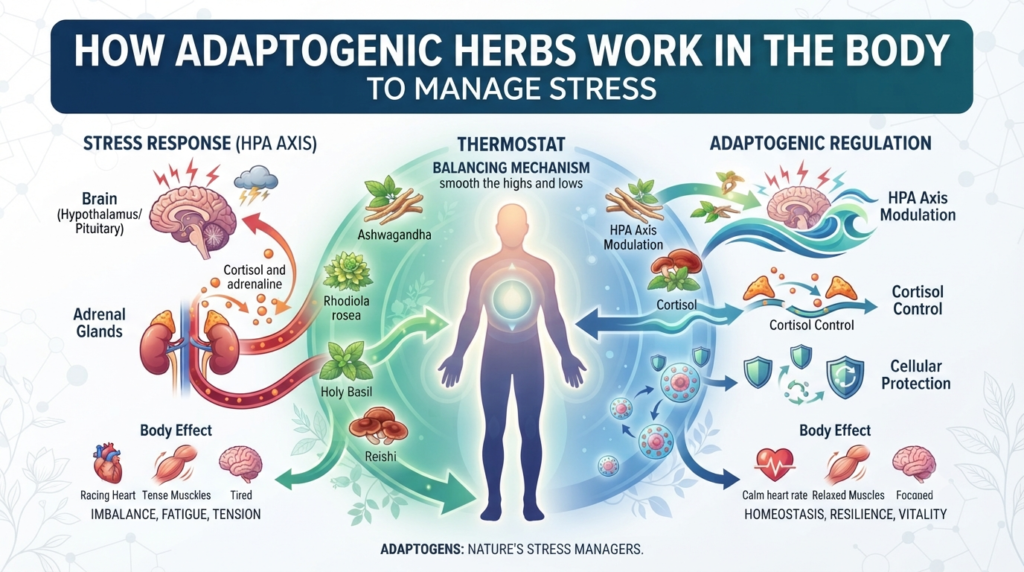
Adaptogenic herbs interact directly with the hypothalamic-pituitary-adrenal (HPA) axis—the central control system for your body’s stress response. Rather than forcing a single direction like a stimulant or a sedative, adaptogens work like a biological thermostat to regulate cellular homeostasis.
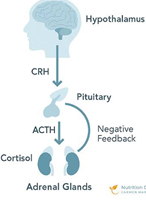
Regulating the HPA Axis & Cortisol
When you encounter physical, mental, or emotional stress, the hypothalamus prompts the pituitary gland to signal the adrenal glands to release cortisol. Adaptogens modulate this cascade, preventing extreme spikes in cortisol during high stress and supporting baseline production during exhaustion.
Balancing Heat Shock Proteins & Energy
Adaptogens help maintain cellular stability by regulating molecular chaperones called Heat Shock Proteins (HSP70) and molecular energy production via ATP. This prevents the cellular damage and energy depletion that typically follow prolonged stress.
How Specific Adaptogens Work
- Ashwagandha (Withania somnifera):
- Primary Mechanism: Mimics GABA (gamma-aminobutyric acid), the chief inhibitory neurotransmitter in the brain, inducing a calming effect.
- Cortisol Control: Bioactive compounds called withanolides directly lower systemic cortisol levels, calming overactive adrenal responses.
- Key Benefit: Ideal for “wired but tired” stress, anxiety, and stress-induced sleep issues.
- Holy Basil / Tulsi (Ocimum sanctum):
- Primary Mechanism: Rich in phytochemicals like eugenol and rosmarinic acid, which protect against oxidative and metabolic stress.
- Neuroprotective Pathways: Helps regulate blood glucose spikes caused by stress hormones and inhibits inflammatory enzymes (like COX-2).
- Key Benefit: Supports mental clarity, cognitive endurance, and emotional uplifting during fatigue.