
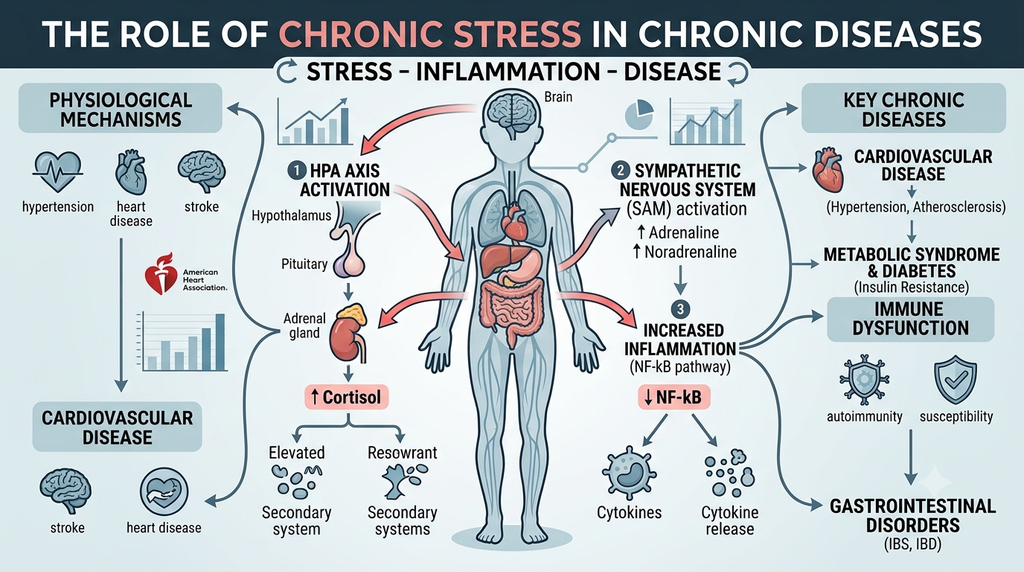
Endocrine & Neurochemical Dysregulation
- Mechanism: Chronic stress triggers prolonged activation of the Hypothalamic-Pituitary-Adrenal (HPA) axis, causing sustained elevation of cortisol and adrenaline (epinephrine).
- Impact on Chronic Disease: Over time, high cortisol levels impair insulin sensitivity, promote central obesity, disrupt sleep architecture, and increase the
Immune System Suppression & Systemic Inflammation
- Mechanism: Persistent stress weakens white blood cell responsiveness while simultaneously triggering the release of pro-inflammatory cytokines (such as IL-6 and TNF-alpha).
Impact on Chronic Disease: Sustained systemic inflammation accelerates plaque buildup in arteries (atherosclerosis), worsens autoimmune conditions (like Rheumatoid Arthritis and IBD), and impairs the body’s natural tumor surveillance mechanisms.
Autonomic & Cardiovascular Strain
- Mechanism: Long-term stress maintains a dominant sympathetic (“fight-or-flight”) response, elevating resting heart rate, constricting blood vessels, and increasing blood pressure.
- Impact on Chronic Disease: Increases risk for essential hypertension, arterial wall damage, heart disease, and stroke while reducing heart rate variability (HRV), a key indicator of cardiovascular resilience.